Communities Pull the Plug on the ICE Detention Machine
March 12, 2026
About ICE Detention Facilities
The Trump administration’s immigration detention expansion is deliberate and opaque. Under the banner of a manufactured “border emergency,” ICE has abandoned competitive contracting by awarding no-bid contracts to inexperienced or newly formed companies with no accountability. This echoes the infamous DHS media campaign that benefited Kristi Noem’s allies. A FOIA lawsuit filed by the ACLU in October 2025 forced ICE to disclose that it is actively considering seven new detention facilities, at least two of which are former correctional facilities with documented histories of sexual abuse, violence, and corruption.
Congress is fueling a rapid expansion by giving ICE $75 billion over four years, with $45 billion to be used for detention alone in that time period.
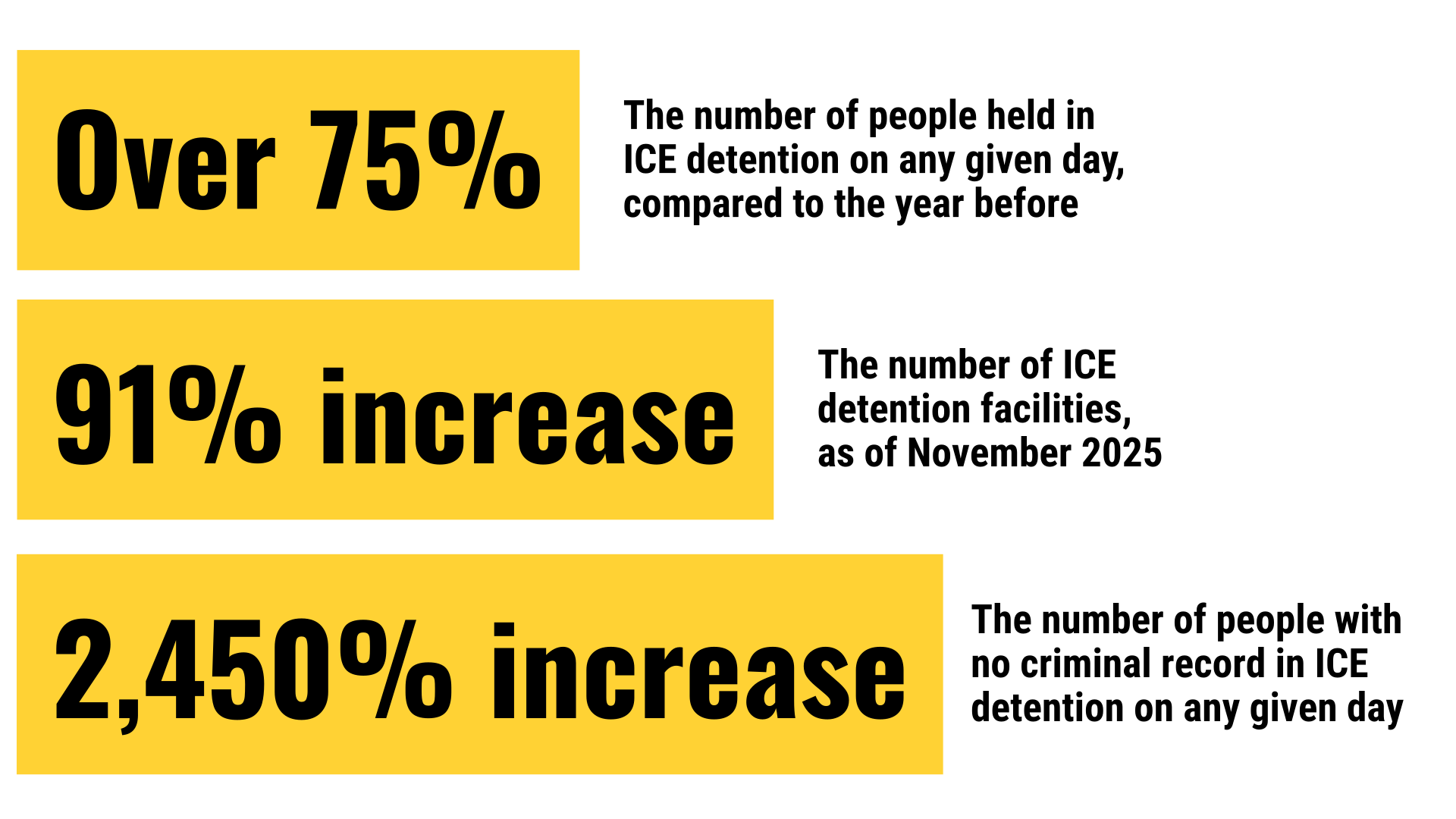
By the end of 2025, ICE was using 104 more facilities for immigration detention than at the start of the year, a 91% increase. Currently, there are 144 detention sites listed on the DHS website. At the same time, the administration has gutted oversight of these facilities by making sweeping cuts to internal watchdogs. It is no surprise that 2025 became the deadliest year for ICE detainees in two decades.
HOW ICE EXPANDED DETENTION IN 2025
It is important to remember that there are those who profit from the deportation state. Private prison giants CoreCivic and GEO Group donated roughly half a million dollars to the campaigns of Republican lawmakers currently in office—the same legislators who approved the billions in ICE detention funding. Not surprisingly, these companies reported a combined $4.8 billion in revenue in 2025, even as investors publicly complained that ICE was detaining people too slowly to maximize returns.
Making Detention a Bad Deal
Yet all is not lost. Communities are fighting back against efforts by ICE to build more detention facilities—and winning.
- In Kansas City, MO, the tax-subsidized developer Platform Ventures was forced to cancel its warehouse sale to ICE following a pressure campaign that included a moratorium on non-municipal detention facilities by the city council, a resolution from the Port KC Board of Commissioners to terminate business negotiations with the company, and protests from residents.
- In Hutchins, TX, sustained community pressure led warehouse owner Majestic Realty to refuse to sell or lease the building to DHS.
- In Ashland, VA, a media agency boycott helped push Jim Pattison Developments to cancel the sale of its warehouse to DHS.
- In Salt Lake City, UT, the county mayor’s commitment to pursuing all available legal and policy avenues led a targeted property owner to publicly disclaim any intent to sell.
- Portland, OR used a land use violation to challenge an active ICE lease, with pushback against detention facilities spanning the city’s political spectrum.
These cases illustrate an important pattern: resistance against the detention machine is consistently bipartisan. Reporting has found resistance to ICE warehouse plans from Trump‑voting communities as well as deep‑blue cities. Even Republican lawmakers in New Jersey and Arizona have also opposed new ICE sites in their districts.
The federal government depends on public cooperation to make its detention machine run—and that cooperation can be withdrawn. Property owners can refuse to sell. Port authorities can sever ties with developers who break public trust. City councils can pass moratoriums. Mayors can mobilize every legal and regulatory tool at their disposal. Residents can show up, protest, and make the political and economic cost of compliance too high to bear. When all of these forces act together, the machine stalls.
Looking ahead, pending federal legislation would require state and local consent before any new detention center can open. This is a recognition that community power, already proven in the streets and council chambers, should be written into law.
What You Can Do
To stop the spread of the detention empire, we need to coordinate, speak out, and use every legal mechanism at our disposal. Here are some ideas to get you started.
Civic organizations are tracking, mapping, and publishing the list of planned detention centers. One outlet has identified 23 sites planned or currently under construction. Other groups are tracking existing deportation centers and need volunteers to keep the data up-to-date. If you live near one of these planned or existing sites, consider joining local efforts that uphold transparency, accountability and human dignity of all people, especially immigrants.
Another option is targeting the companies that are profiting from these detention centers. Make sure your savings aren’t invested in immigration detention centers and learn from the communities that have pushed their local banks to divest from privately owned ICE detention centers.